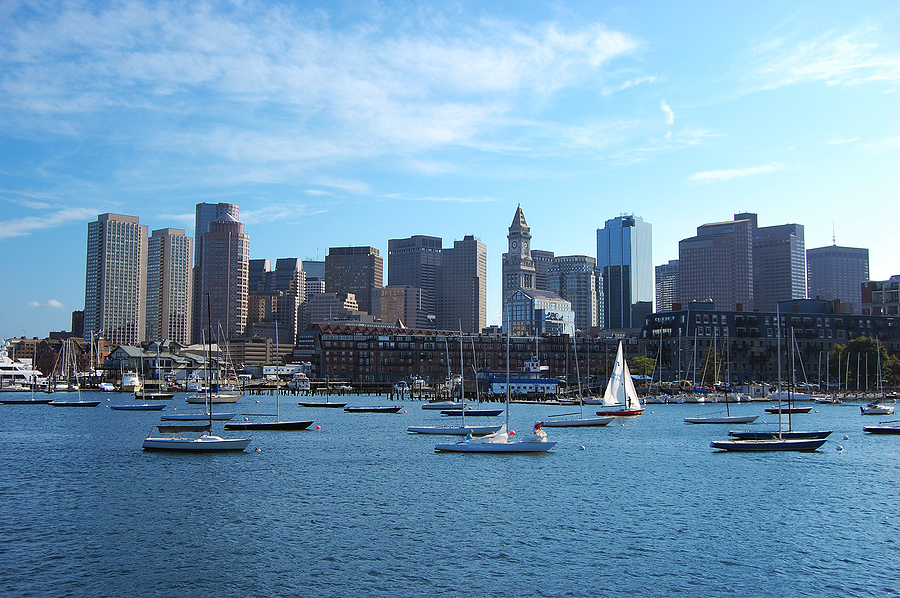
It can be difficult to choose where to stay on a big-city visit. Hotel chains are everywhere, and typically look the same, no matter where they’re located. They serve their purpose nicely. However, on this visit to Boston, a boutique hotel was considered for its local charm, affordability, and its own place in history in this almost four-hundred-year-old city.

Meet The Kendall Hotel, adjacent to MIT, and within a short distance to the Red Line, one of the city’s easy-to-navigate subway lines. Built in 1895, the Kendall Hotel was originally home to Engine Company #7 fire department. With its two horse drawn pieces of equipment – steam pump and hose wagon – the company served what was then a rapidly growing industrial area before closing its doors in the 1990’s. Architects and developers saw the possibilities in this abandoned building, and transformed it into a stylish, fashionable hotel in an urban area, convenient to all transportation. It’s a true definition of a boutique hotel. (And the buffet breakfast is a nice way to start the day.)
Up on the seventh floor is a rooftop retreat that’s quiet, with comfy couches, and soothing designs. It was a nice touch by the architects to add, as it complements a busy day of touristy activities, when one isn’t quite ready to retire.
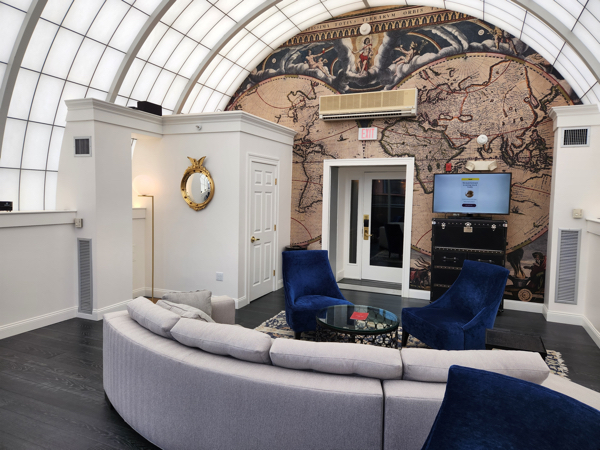
Rooftop retreat at the Kendall Hotel
Pick up a “Charlie card” at the front desk — the reloadable transit card to access train turnstiles — and Boston is ready to be toured. The kiosks in the stations have easy to follow directions on adding funds to the plastic card; and it’s recommended to use credit card in lieu of cash so any change back doesn’t result in a heavy pile of coins. The train routes make sense, and all the important sites of the city are within reach and well-marked.
If you’re looking to do history tours, prepare for plenty of walking. It’s the best way to see the city. Even on the way from the train stop to the destination, there’s typically something to see, a historic pub, historical marker or plaque. On almost every block, there’s some example of a significant centuries-old building or event.
Four activities were top of the list and all available via public transport: JFK Presidential Library, historical walking tour, an evening ghost walk and a Red Sox game at Fenway.
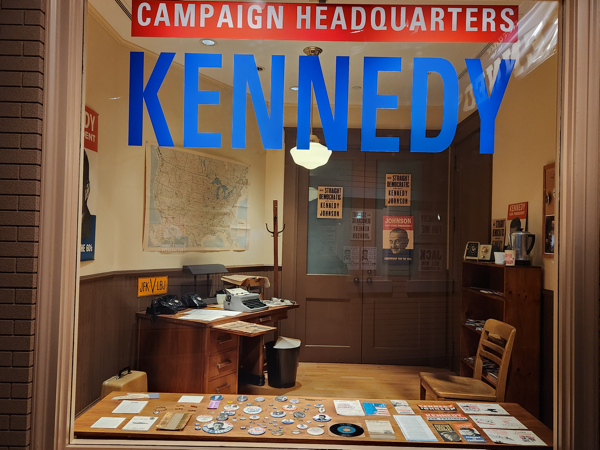
Stop #1: The John F. Kennedy Presidential Library and Museum is located on the waterfront overlooking the Atlantic Ocean, a fitting spot for Kennedy who spent a great deal of private time on the water. His “beloved” sailing ship, the Victura, which he used for 30 years, is on display beside the library building.
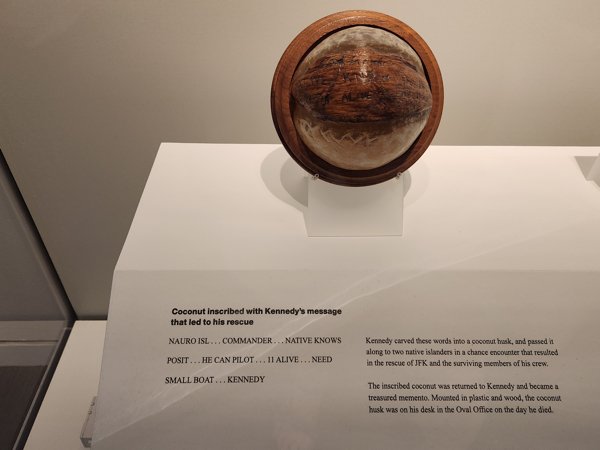
Presidential libraries are not only a collection of personal items, but also official documents, photos, and snapshots of life in America during their time in office. Of course, it helps if you’re a fan, so something like wartime dog tags may hold extra meaning. Same for viewing the original coconut JFK used to carve an SOS message while stranded with his crew after his PT-109 ship was hit by a Japanese destroyer.
Black and white family videos, and campaign photos can be viewed in two theatres throughout the day and provide the life story of the reluctant politician and the early experiences that shaped the leader he would become. Exhibits focus on his presidential campaign, his televised speeches, state dinners at the White House, and Jackie’s influence on events and decor.
One darkened, simple room is dedicated to the November 1963 assassination, with short clips of news reporters announcing the updates on that fateful day. It’s in stark contrast to the rest of the brightly lit museum, which reflects the star-quality of his time in office, steady leadership during times of crises, and accomplishments he left behind.
Whether or not one is a fan of the politician, the happenings of any presidency can still resonate in American life today.
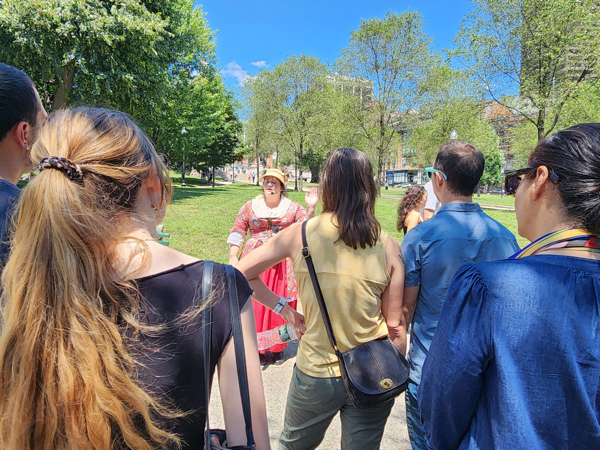
Stop #2: Freedom Walking Trail was led by a tour guide with the name, Thankful Rice. Not the woman one who lived during the 1600’s in the nearby Boston cemetery but as recreated by Karen on this afternoon’s Boston Common tour. Dressed in a period outfit, Thankful was well-informed, with a good sense of humor. Despite its serious part in American history, the city loves to poke fun at itself and its quirky past. A few stories center around the nearby Granary Burial Ground (c. 1660).
On one of the obelisks, we see the name “FRANKLIN” is carved in stone. Of course, as Thankful explains, this leads visitors to think it’s Benjamin’s resting place. Not so. He’s over in Philadelphia. This one here is for his parents. One can only guess why only the last name is mentioned: could it be to give the burial ground a bit more status?
There’s a tombstone marking Samuel Adams’ plot which faces the pub across the street. A popular activity is having a cold Samuel Adams brew at the pub while facing a “cold Samuel Adams.” (Get it?) So popular is the activity, the pub has tee shirts for sale with the phrase printed on the back.
Thankful Rice covered the details of Boston’s past including the Boston Massacre, the significance of the Old South Meeting House (where the Boston Tea Party protest was planned), and the bustling Faneuil Hall (built in1742 as a meeting hall and marketplace). One more story that deserves mention is the significance of the Sacred Cod, a wooden carving of the fish that has hung in the Massachusetts House of Representatives since 1895 as a reminder of the importance of the cod-fishing industry. When it was stolen in 1933, presumably by pranksters, there were plenty of anonymous tips, “fishy rumors, and red herrings” that came “flooded in.” (Groan.)
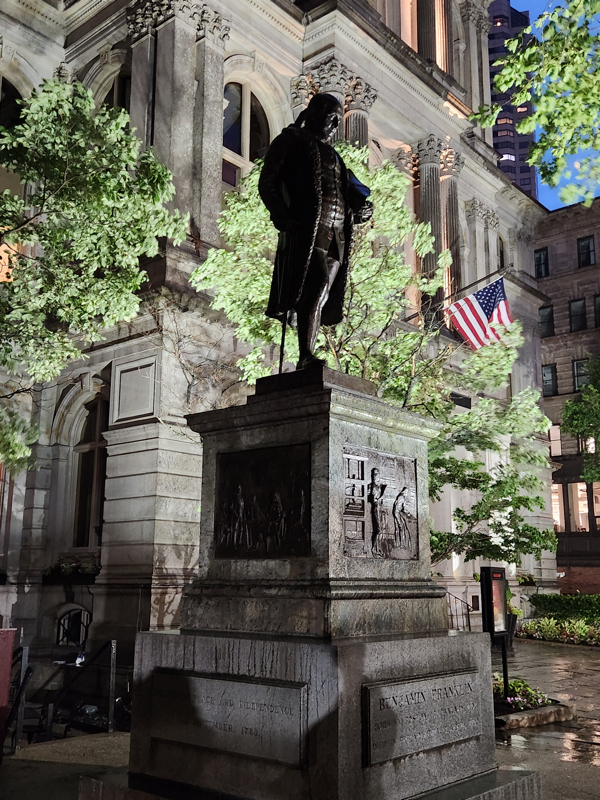
Stop #3: U.S. Ghost Adventures hosts evening walking tours, and on this night, it was led by Nicole. She turned out to be extremely knowledgeable about Boston’s haunted past but also one dedicated tour guide. Not long after the tour began, the heavens opened; lightning flashed overhead, and crashes of thunder came seconds later. Nicole never blinked but asked if anyone needed to leave. But this group of hearty ghosty fans walked on. One wonders if the storm was part of the tour as its appearance was perfectly timed, adding extra spookiness to an already eerie event.
We heard of tombstones removed and placed in neater rows because of the invention of the lawn mower. The inhabitants of the cemetery weren’t too happy about that. Or about the train line that was dug underground, and the screeches heard were said to come from the subway cars, or maybe from those trying to get their eternal rest. Rumors that kicking and screaming can be heard from some of the burial plots. Makes one thing twice about wandering near the cemetery after dark.
One fascinating story concerned the Omni Parker Hotel which claims to have the most haunted hotel room in America. Its reputation caught the attention of Stephen King who used it as inspiration for his novel, 190.8. When you consider the times Boston lived through: protests, massacres, war, and plagues, the perfect conditions exist for things to go bump in the night.
Stop #4: Fenway Park. I grew up in a family who loved baseball. The Brooklyn Dodgers, then the New York Mets in ’69, the Yankees in ’86. We played it growing up, we watched it whenever we could. So, a trip to Fenway Park, the oldest baseball park in the U.S., had to be a stop on this trip.
Yes, it’s the home of the Red Sox – the Yankees’ nemesis since the time of baseball began. Built in 1912, the stadium has been renovated and expanded over the years. It offers a small-town experience, with less seating capacity, but a more ear-friendly sound system, unlike the towering stadiums in New York with their pounding sound effects. That part of the visit was easier on ears.
As I observed the fans around me, the fathers and sons, retired couples, groups of teens, I felt like a traitor, something akin to say, Paul Revere, in 1775 as he spied on the British. After a few innings, with a day of touring behind me, I felt I’d seen enough and was ready to call it a day. The Red Sox jersey I was handed — as it was a promotional night — remains sealed. Evidence of my treason.
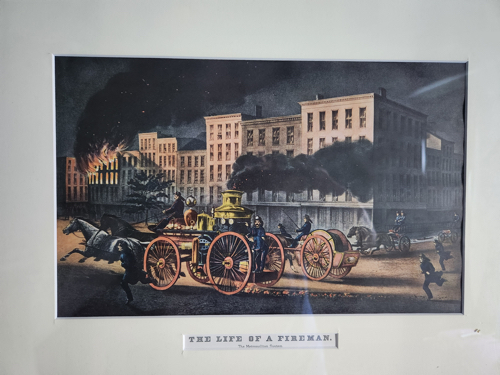
I looked forward to jumping back on the T line, exiting at the Kendall Hotel, my home away from home. But before retiring for the night, I wandered the hotel floors admiring the fire department décor and paraphernalia the old-timey pictures, and fire mementos from other fire houses. Then one last stop: to the seventh-floor rooftop retreat to let the stories of this great city sink in.
Top photo: Bigstock
All other photos by MJ Hanley-Goff