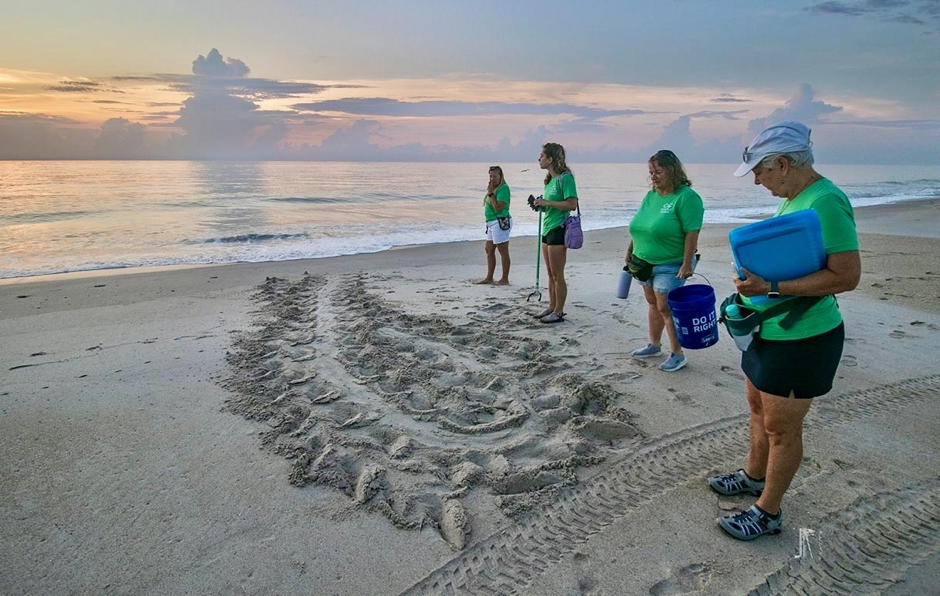
Olivia Redding from Coastal Connections and I met at the boardwalk in Vero Beach, on Florida’s eastern shore. She’s wearing the green shirt that workers and volunteers wear, alerting early morning beach walkers that she’s there on a mission. That mission is to check the forty or so nests of baby turtle hatchlings, still in their eggs, laid weeks ago in the spring. This summer (2025) was a particularly heartbreaking one because the fury of Hurricane Erin tossed tons of sand on these delicate nesting areas as it blew down the coast. But we can still tell where the nests are because of the blue stakes, like paint stirrers, peeking out of the beach sand.
Redding spent the morning with me, walking down the half mile stretch of beach they monitor for traces of sea turtle activity, new nests, and general observations of the existing nests. She can tell the type of turtle that came up on the beach by the tracks left by their crawl along the sand to a potential nesting site. One track we saw looked like curly lasagna, typical of a green sea turtle. We could see the trail as it headed up towards a spot under the boardwalk, but it had turned back to the sea without digging a nest. Evidently, as Redding explained, it wasn’t a suitable spot.
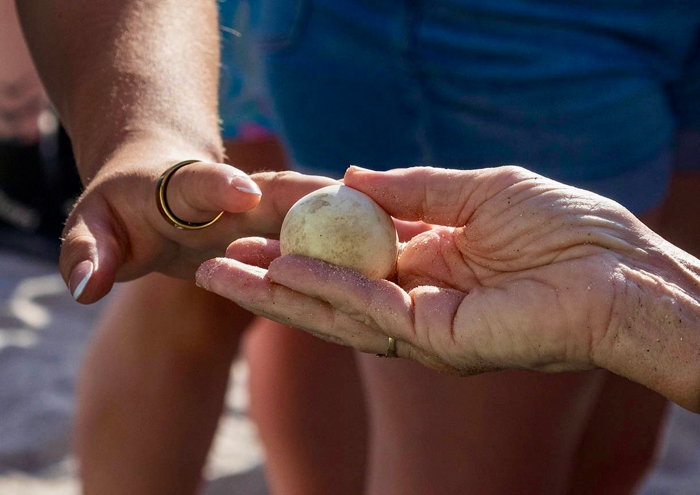
Loggerhead sea turtle egg (Photo credit: Joe Rimkus – Coastal Connections, Inc. volunteer)
Turtles can lay up to five to seven nests a year, with hundreds of eggs laid. While that may seem like a hefty number, not many make it. Baby hatchlings must surpass many obstacles before they reach adulthood: not hatching properly at the start, dehydration, being gobbled up by a predator on its journey to the sea, and once it’s reached open water, there’s plenty of new dangers from sea creatures who feed on them. It’s estimated that only about one in a thousand survive.
Coastal Connections, Inc. (CCinc) was started in 2017 by a post-graduate student, Kendra Bergman, who saw the big numbers of turtles in the Vero Beach area (part of Indian River County) who needed protection, and the population of residents and tourists who needed to be educated. Over the years, it has grown into a well-known and respected environmental group, and their motto is simple, making community connections one at a time, just like they approach turtle rescues: one at a time.
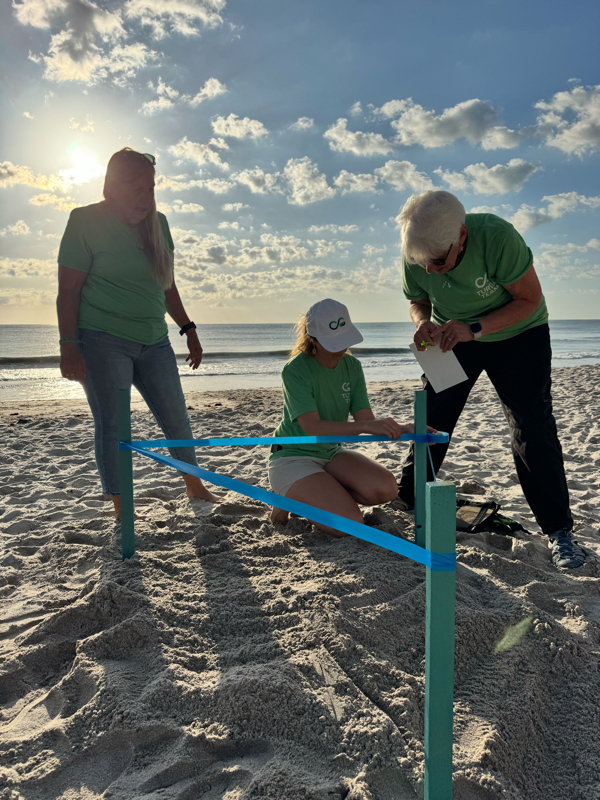
Nest Monitoring (Photo Credit: Nancy Vandergrift)
Their organization has been given special status to operate the largest sea turtle rescue in the County and, on average, assist in hundreds of calls for sick, injured, exhausted or dead turtles per year. They’re also part of a transport group that can bring the turtles to rehab facilities across Florida. They place hatchling coolers around the area should anyone find a tuckered-out hatchling or a washback (one that was washed back on shore by strong currents). Redding is quick to advise that beach walkers not assist the babies to the sea as they must make their own way. “Doing so,” she says, “interrupts their natural imprinting to find their way back to the beach of their birth when they’re ready to reproduce.”
The function of CCInc is divided into four components: experiences, conservation, sustainability and education. They are supported by a variety of sources: private donations, corporate sponsorship, fundraising events like a two-mile run fun, and their popular “adopt a nest” campaign where adopters can follow their nest along its two-month incubation period, receive hatching results, a certificate and a “special gift.” At public turtle digs throughout the season, they’re given VIP status. Redding mentioned that these adoptable nests go quickly, with the campaign beginning in May.
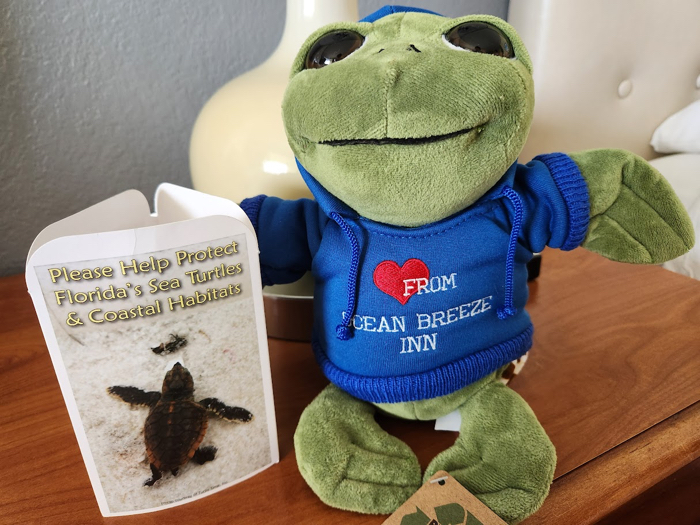
Turtles for sale in Ocean Breeze Inn to support CCInc (Photo Credit: MJ Hanley-Goff)
There’s great cooperation from the Vero Beach community. Nearby at Ocean Breeze Inn, for instance, with their ocean-facing balconies – guests have the perfect spot to watch the volunteers do their early morning nest monitoring. Inside the lobby at check-in, guests will see information about the turtle rescue, the hotel’s participation in the “lights out” ordnance so that nesting turtles can get the much-needed darkness for their hatchling process; there’s an adorable turtle plushy souvenir for sale that brings attention to the organization’s efforts. There are community clean-ups for school groups, and “career-based” STEM school programs to inspire the next generation of environmentalists.
Returning our attention to the nests beneath the sand from the summer hurricane, Redding still has hope for the eggs but they won’t interfere with mother nature. “We can’t remove the sand,” Redding explained, “because we want things to be as natural as possible. This accretion of sand would’ve happened whether we were monitoring or not and we want the process to proceed naturally.”
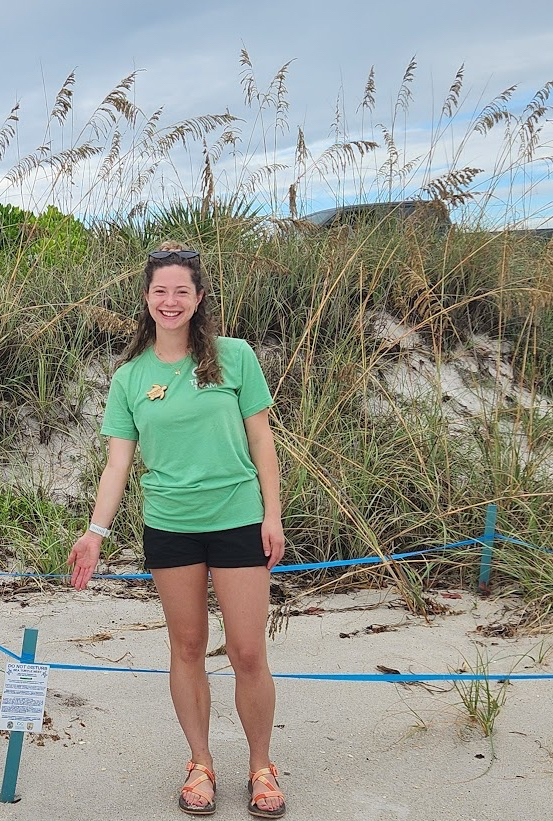
Olivia Redding pointing out nesting site (Photo Credit: Phyllis Morley)
To those who wonder about the efforts to support something so small as a baby turtle, Redding says this:
As someone who is devoting my life to this, I would say it’s because they can’t speak for themselves and the majority of the threats they face are anthropogenic. As humans, we have caused their declines; they were overfished as a food source in the late 19th and early 20th centuries, they’re subject to poaching, both as adults and eggs, they are threatened by trash that WE produce and isn’t disposed of properly, including being entangled in and strangled by fishing line, they’re hit by boats, and so much more.
They’re also fascinating and charismatic creatures, which is the reason I chose to work to conserve them in the first place. I know that when I rescue a turtle or participate in any of our programs, I’m making a difference in a sea turtle’s life and contributing to their survival, either by physically transporting them for rehab or working to educate our community on how we can advance their survival.”
It has been said that the more we learn about something, the more we tend to care. Through the work of this group, and the cooperation of businesses that share the information, thousands of people visiting the Vero Beach area become more aware of the interconnectedness of people and nature. The more we care for our planet, the more all living things – us included – will not only survive but thrive.
Thanks to Olivia Redding of Coastal Connections and their volunteers
Thanks to the Ocean Breeze Inn for their hospitality
Top photo: Nest Monitoring (Photo Credit: Joe Rimkus – (Coastal Connections, Inc. volunteer)