
A conversation between Crocodile Dundee and New York newspaper reporter, Sue Charlton
Charlton: What do you think about the arms race?
Dundee: None of my business.
Charlton: None of my business? It’s everybody’s business. Got to have an opinion. Got to have a voice.
We are days away from an election which will decide who will be the next mayor of New York City. In New Jersey and Virginia, voters will cast ballots to select their state’s next governor. And in a little more than a year, the midterms will determine which party controls the House and the Senate. And yet, all too often I’m hearing from friends and those I interact with that they won’t vote. Their excuses vary. Some, like Crocodile Dundee believe whatever happens won’t affect them. Others don’t like their choices. Still others believe that no matter who is elected, government will continue to be corrupt.
There will be some people, legal immigrants and people of color who will be afraid to come out, fearful that they might be swept up by ICE and arrested and detained. That is a danger, but if this group doesn’t vote in numbers, what is happening in our cities will continue to happen. But yes, it’s a tough call.
The U.S. Supreme Court recently heard arguments about the Voting Rights Act and there’s concern that some protections to ensure that everyone’s vote counts will no longer be protected. That means that getting out the vote, encouraging everyone to cast their ballots, will be even more important. In the 2024 presidential election, 73.6% (or 174 million people) of the citizen voting-age population was registered to vote and 65.3% (or 154 million people) voted according to new voting and registration tables released by the U.S. Census Bureau. That means that more than one-third of our population stayed home. Would the election have had a different outcome if those people had come out instead?
I met a woman recently who came to the U.S. in 2006. Her husband’s business is being impacted by tariffs. Her two elderly relatives live with her and she’s worried they might lose their health care. Her two children, teenagers, are ambitious, one reason she told me she came to this country. She’s now a citizen, but when I asked her whether she would vote in the upcoming mayoral election, she shook her head. And in future elections? She told me she works late every day and she doesn’t have the time or energy to watch the news and educate herself. But when she spoke about the country she came from, how any talk about the dictator in power might land her in prison, she was glad to be in the U.S. Was she concerned that in this country the right to speak out is being threatened? She just shrugged.
While these conversations are difficult, I keep having them. Yes, it’s important to join thousands of people to march, but often we are marching with the choir, with people who have the same concerns we do and have joined the march to show their support for the cause. It’s those one-on-one exchanges, whether with a relative, close friend, or just someone who works in a store, that will lead to further dialogues. Thoughtful conversations that are respectful to the other person’s viewpoint is what we should be aiming for.
Turns out that even Crocodile Dundee cared about issues that affected him where he lived, in the Australian outback, in the aptly named Walkabout Creek. When rogue hunters began to kill kangaroos, he went after them. He used brute force, but if there had been a ballot item banning such killings, he might have voted for that, too.
The right to vote is a freedom given to us because we live in a democracy. Please guard that right. No matter who you choose, no matter what the race, no matter when, get out and vote.
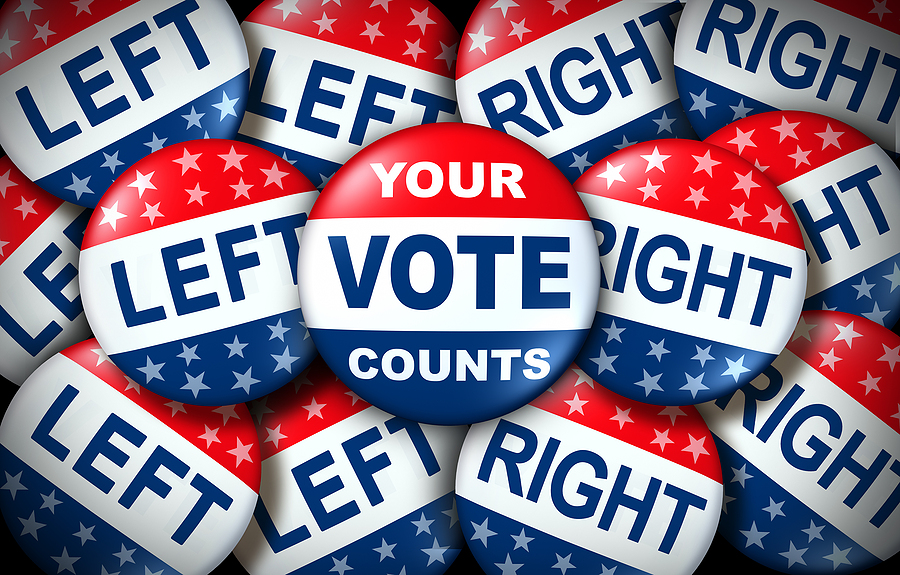
Top photo: Bigstock