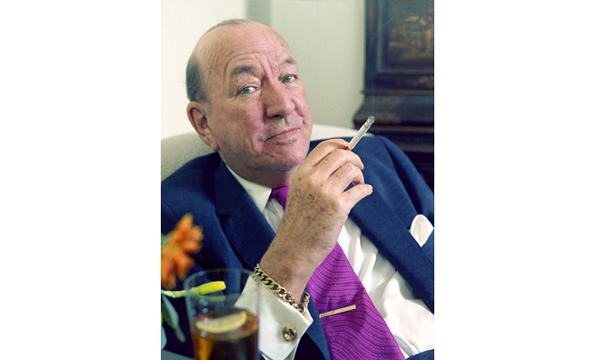
Sir Noël Peirce Coward (1899 –1973) was an extraordinarily multifaceted talent, excelling as actor, director, vocalist (Frank Sinatra said, “If you want to hear how a song should be sung, go see Mr. Noël Coward”), songwriter (he could neither write nor read music), and playwright. Not only was he jack of all these trades but, despite occasional failures, their master. The artist was equally well known, in some circles more well known, for wit, brio, sophistication and personal style. He was arguably a charming painter, indisputably a patriot, and discreetly gay.
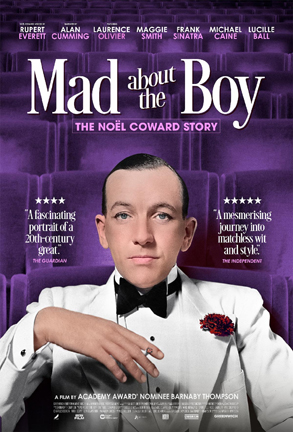
Mad About the Boy, opening in theaters October 11, is an entertaining, illuminating, cohesive, and moving portrait of a autodidact who invented himself. Whether a diehard fan or curious to see what the fuss is all about, the film may leave you a bit in love. Coward’s crisp crust might’ve been gilded, but his heart was tender.
Noël Coward was born poor to an adoring mother and mostly absentee father. “I was trained very young as a showoff. I’ve continued triumphantly till this moment,” he told one interviewer. With his mother’s help, the boy left school for a career in West End shows and pantomimes starting at ten. He became the family breadwinner. On the soundtrack, we hear, “Don’t Put Your Daughter on the Stage, Mrs. Worthington.” All the music fits narration (by Alan Cumming) as if bespoke. Some is recorded, some we see Coward himself performing.
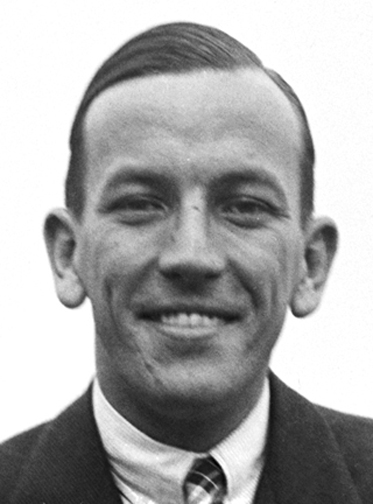
Noël Coward 1925 (Public Domain*)
At 20, he sailed for ostensibly greener pastures in America with a pile of manuscripts and 17 pounds.
“My faith in my own talents was unwavering, but it did seem optimistic that America would recognize them immediately.” Publicly, Coward was the epitome of insouciance. Much is taken from his own writing voiced by Rupert Everett. Archival images show Manhattan. The penniless, lonely young man learned quickly that pacing and dialogue emphasis ruled American theater.
His play The Vortex focused on a drug addict (a stand-in for homosexuality) that confronts his vain mother about having an affair with a much younger man. Coward attached himself to the production as its lead. Producers wouldn’t cast the unknown actor. As his intention was to “write a good play with a whacking great part in it for myself,” he borrowed money, went home, and mounted it at a fringe venue North of London. Newspapers deemed it, “the most decadent play of our time.” The playwright bought silk shirts, dressing gowns, pajamas and a car.
Like his character, Coward was 24, well groomed, witty, and decadent. He began to capitalize on the new image to disguise his background. Blonde, American stockbroker Jack Wilson walked into his life doubling as an “advisor.” One play after another successfully followed. Between the pressures of keeping up and masking homosexuality (illegal in England), melancholia enveloped the artist. A trip to Hawaii produced the famous “Room With a View”: A room with a view/And you/And no one to worry us/No one to hurry us
Through…
The film chronologically takes us through plays, songs, and performances peppered by clips of guests. John Gielgud was Coward’s understudy in The Vortex. Young Laurence Olivier was convinced to act “the bad part” in Private lives when the playwright told him, “You’re very attractive and I need the competition.”
Private Lives was written for Gertrude Lawrence with whom Coward had been friends since they were child actors. When he sent the script, her telegram responded: “Nothing wrong that can’t be fixed.” Dialogue of the play is incomparable in its droll, world weary finesse. “It wasn’t intended to be an accurate representation of a given class,” he wrote. Still, audiences took it as such.
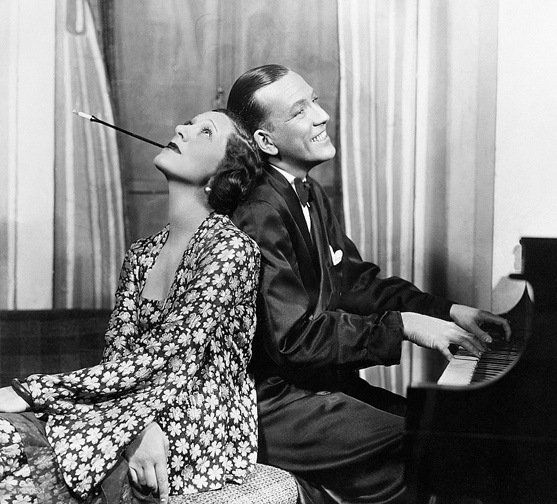
Gertrude Lawrence and Noël Coward in Private Lives (Public Domain)
By 30, Coward was the highest paid writer in the world. “Sail Away” underscores travel. Voice-over is often accompanied by wonderful home movies. Eventually, Coward bought a farm where he lived with Jack and his mother. Film from there is carefree. We hear “The Stately Homes of England”: The stately homes of England, how beautiful they stand/To prove the upper classes have still the upper hand…His was modest by comparison.
The Royal Family came to visit. Her Majesty asked whether he’d be open to receiving a title. Coward was thrilled. Alas, Winston Churchill was so against homosexuality, he prevented it for many years. Friends and lovers alike declare the artist to be sensitive and without snobbery. Actor John Mills calls him a “steak and kidney pie man.” Maggie Smith describes his straightforward directing skills. Michael Caine refers to generosity in acting.
Anthony Havelock Allan and David Lean respected Coward’s dramatic prowess so much they mourned his playing so much comedy. Movie roles and films he’s written are illuminated by clips, the artist’s thoughts, and often reflections by those with whom he worked. Cavalcade and In Which We Serve were two called unapologetically patriotic. “I really meant it,” Coward protested when accused of mockery.

Coward, with Norman Hackforth at the piano, performing for sailors aboard HMS Victorious in Ceylon, August 1944 (Public Domain)
In fact, he was recruited by the government and sent to Bletchley Park to start a propaganda agency. Touring America the entertainer was pressed into trying to convince this country’s entrance into war.
“I was the perfect silly ass. People felt free to talk,” he wrote. The song “London Pride” signified emotions: London Pride has been handed down to us/London Pride is a flower that’s free/London Pride means our own dear town to us/And our pride is forever will be…
After Jack, a few young men came and went, but Graham Payne would be the relationship that sustained Coward the rest of his life. Brief Encounter, one of the greatest romantic films of all time, showed the artist’s tenderness. Blithe Spirit was perhaps his most lighthearted script. Both are considered classics now. After the war, show after show failed. Gertrude Lawrence died. Coward landed in debt…until the idea dawned to do a cabaret act.
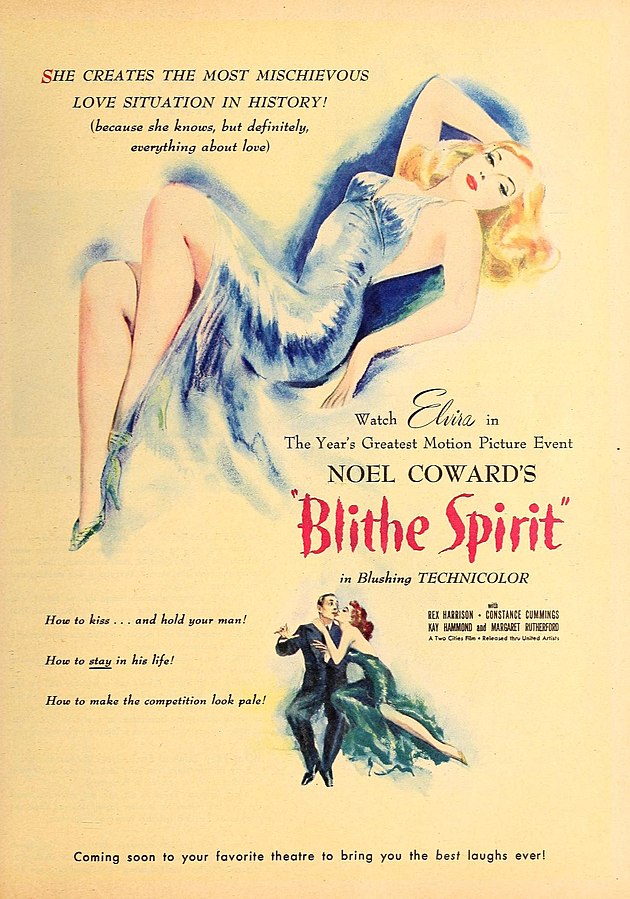
Blithe Spirit (film) 1945 (Public Domain)
A run at Café de Paris, was followed by invitation to appear in Las Vegas.“I don’t care if they throw bottles at me, for that money, I’ll go,” he declared. Coward was a huge success. There’s a recording of the show: Noel Coward at Las Vegas, for those who’d like to revel in original phrasing. We hear “I Like America”: I like America/I have played around/Every slappy-happy hunting ground/But I find America-okay… Watching him here is a treat.
Every television talk show suddenly courted his amiable wit. Many of his plays acquired new audience with revivals. Taxes, however, drove him from the country he loved. In Jamaica, he painted, frequently played host, and would die at 73. Asked “How would you like to be remembered?” Noël Coward replied “As somebody who contributed to the pleasures of other people, a good friend, and a rather amusing character.”
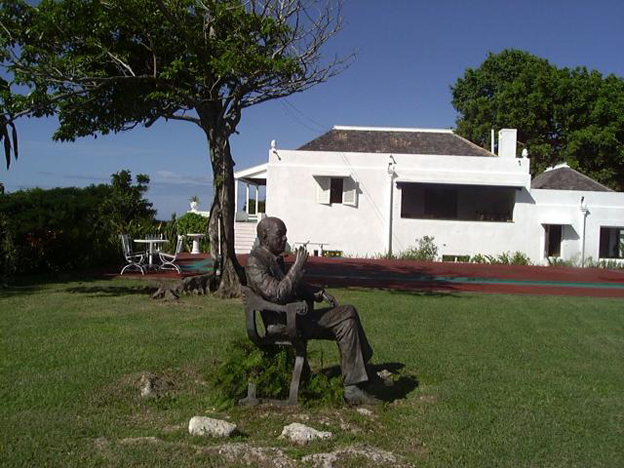
Coward’s Estate Firefly in Jamaica (Public Domain)
Above is the tip of the iceberg. I can’t recommend this documentary highly enough. Its direction, writing and editing is superb.
Opening: Coward in the dressing room 1940 (photo courtesy of the film)
*This work is from the George Grantham Bain collection at the Library of Congress under the digital ID ggbain.38534.
Opening: Coward by Allan Warren 1972 -This file is licensed under the Creative Commons Attribution-Share Alike 3.0 Unported license.
Mad About the Boy: The Noel Coward Story
The life and times of Noël Coward – writer, director, actor, songwriter, singer, film director, and poet. His rise from a shabby suburb of London to becoming the greatest multi-talented artist of all time, told in his own words, music, and extraordinary home movies.
Directed and Written by Barnaby Thompson
Producers: Barnaby Thompson and Gregor Cameron
Narrated by: Alan Cumming
Noël Coward Voiced by: Rupert Everett