
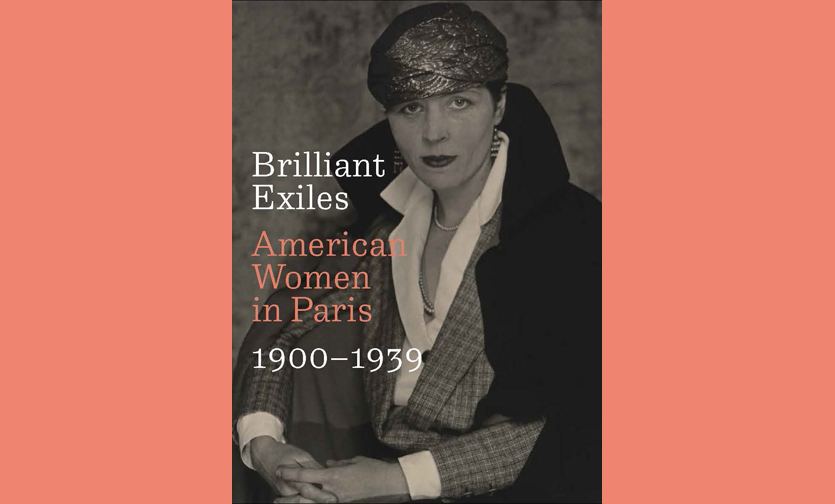
This beautifully produced, lavishly illustrated book deep dives into a literal and metaphoric movement all but unknown to those who consider “The Lost Generation” to be almost exclusively made up of men. So many talented American women fled to Paris 1900- 1939, they dominated the expatriate Parisian community. Artists, writers, journalists, publishers, entertainers and non conformists escaped constraints of race, class, and sexuality across the ocean.
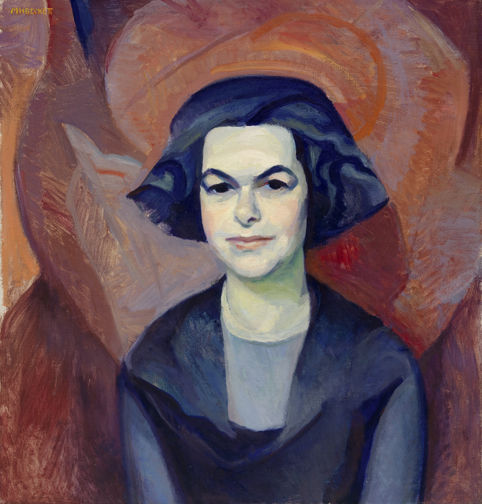
H. Beckett – Theresa Helburn – 1922. Oil on canvas. National Portrait Gallery, Washington, D.C.
Women reinvented their names, ages, histories, and professions. They escaped unhappy marriages (journalist Janet Flanner, composer Nora Holt, artist Nancy Elizabeth Prophet) or pressure to marry, and pursued creativity on their own terms. Cross pollination was rampant.
The foreigners didn’t sit on sidelines during WWI. American interior designer Elsie de Wolfe cared for soldiers, while her lover Ann Morgan established The American Committee for Devastated France to aid French civilians. Socialite Gertrude Whitney organized mobile hospitals. She would later study sculpture with Auguste Rodin and become a world class art collector.
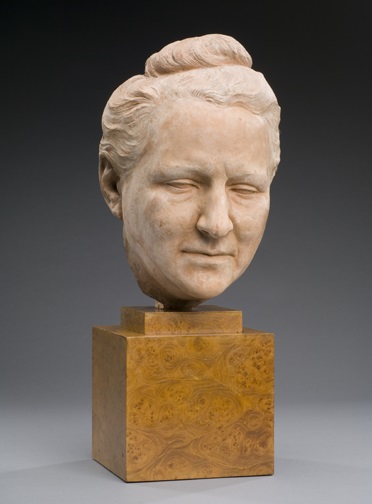
Jo Davidson – Gertrude Stein,1922-23. Teracotta. National Portrait Gallery, Washington, D.C.
Experimental author/art patron Gertrude Stein and her partner Alice B. Toklas who fled to southern France during the war, delivered hospital supplies. Returning to Paris, the pair would host a hugely influential salon of writers and avant-garde artists. Natalie Clifford Barney also held internationally known, weekly open houses. “The universe came here,” French critic Edmond Jaloux wrote.
After the war, Sylvia Beach and her French lover, Adrienne Monnier established Shakespeare and Company, an English language bookstore and lending library that eventually published James Joyce and D.H, Lawrence, both censored elsewhere. The shop was deemed “the cradle of postwar American literature.” It stands today.
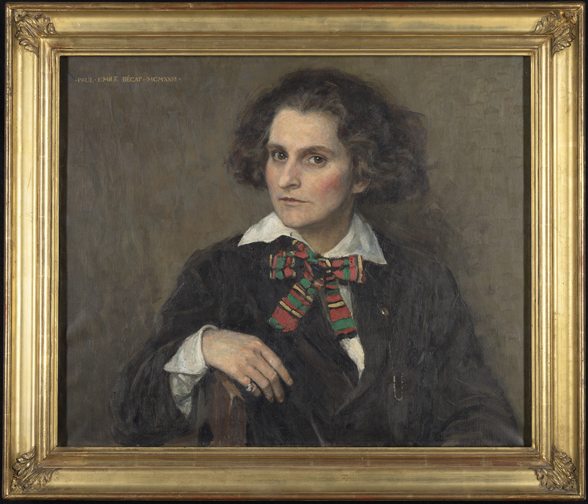
Paul-Émile Bécat – Portrait of Sylvia Beach, 1923. Oil on canvas. Manuscripts Division, Department of Special Collections, Princeton University
Djuna Barnes wrote Nightwood, a cult classic of Lesbian fiction, during her time in Paris. Novelist/diarist Anais Nin’s open marriage almost broke up that of Henry Miller. Writers Kay Boyle, Edna St. Vincent Millay, and May Sarton were in residence. Caresse Crosby and her husband established the experimental Black Sun Press. Isadora Duncan, successor to American dancer Loïe Fuller, brought her uninhibited choreography and found supporters. Painter Mary Cassatt was befriended by Edgar Degas. Photographer Berenice Abbott found her portrait muse. “There were no rubber stamps among us,” she said.
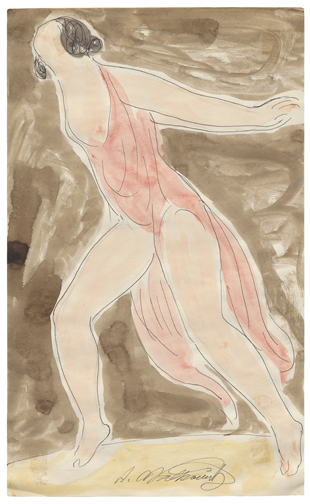
Abraham Walkowitz – Isadora Duncan – date unknown. Ink, watercolor, and graphite on paper. Hirshhorn Museum & Sculpture Garden. Smithsonian Institution, Washington, D.C.
Photo by Alex Jamison
Ada “Bricktop” Smith opened her own mixed race nightclub bringing Harlem jazz to the French. With her partner Mabel Mercer, she reigned for years booking such Americans as Adelaide Hall and Ethel Waters. Josephine Baker arrived in 1925, taking the city and Europe by storm with her banana dance, then working for French Resistance during the next war. Opera singer Lillian Evanti became the first African American to perform with grand opera companies in Europe. The book has a chapter called Harlem’s Renaissance in Paris.
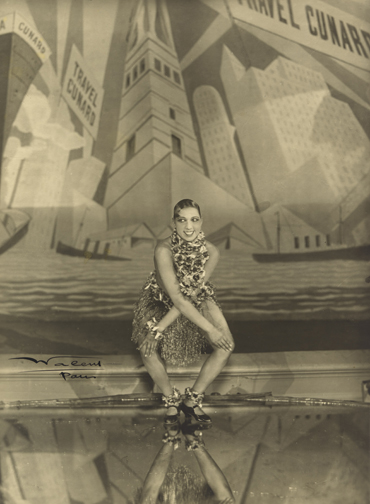
Stanislaw Julian Ignacy Ostrorog, known as Walery – Josephine Baker – 1926. Gelatin silver print. National Portrait Gallery, Washington, D.C.
Extensively researched, Brilliant Lives offers brief biographies centered on creative pursuits. Some of the women both created and posed for art. Many are obscure to all but those who have studied. A wealth of revelatory pleasure awaits. There are 57 remarkable women in the volume. All are visually depicted by drawing, painting, sculpture or photograph. Range of style is vast. Make your way through slowly and savor. The journey is its own reward.
“American women achieved great things in Paris, but perhaps more importantly, they gained the freedom to explore what it meant to live authentically.” Robyn Asleson
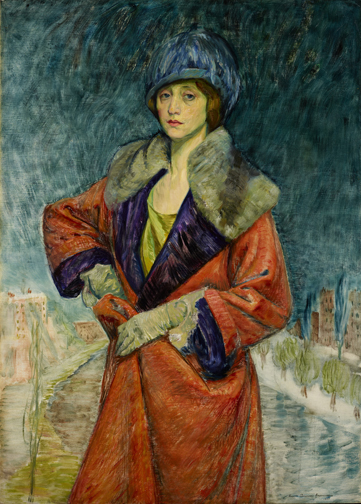
Frances Cranmer Greenman – Self Portrait – 1923. Oil on canvas. Minneapolis Institute of Art.
Brilliant Exiles is the catalog of a far ranging exhibit at The National Portrait Gallery in Washington, D.C.
Authored by Robyn Asleson with Zakiya R. Adair, Samuel N. Dorf, Tirza True Latimer, and T. Denean Sharpley-Whiting
All photos Courtesy of National Portrait Gallery, Smithsonian Institution, Washington D.C. and their original sources. “Brilliant Exiles” exhibition runs through February 23, 2025 at the National Portrait Gallery.
National Portrait Gallery, Smithsonian Institution, Washington DC in Association with Yale University Press, New Haven and London