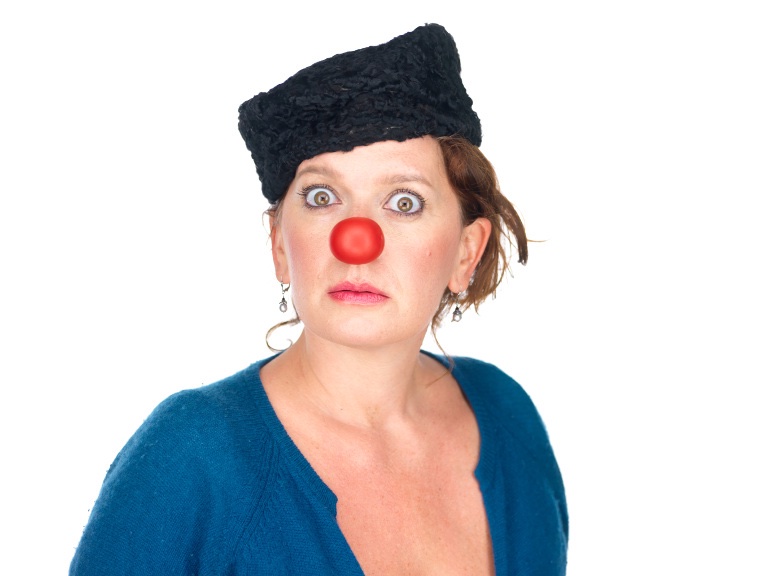
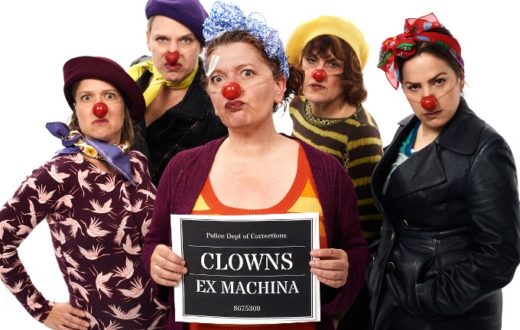
Kendall Cornell, leader of Clowns Ex Machina, has been creating and performing clown work since falling in love with it 20 years ago. Of her versatility and range as a performer, David Shiner (Fool Moon, Cirque du Soleil) says, “Kendall Cornell’s insightful, sensitive world fits perfectly into any clown hat she chooses to wear.”
Kendall has brought her clown talents to a collaboration with flamenco artists (creating the clown-flamenco evening Oil of Olé: Flamenco Girl’s Clown Tablao with internationally renowned singer Alfonso Cid); a commission by Canada’s Cirque du Soleil to create a special women clown extravaganza event in New York City; and her own dynamic solo clown pieces such as Flamenco Girl, Pink Salome, The Maneater, Glamourpuss, P.S. de la Resistance and The Wallflower, which have been presented at La MaMa, The New York Clown Theatre Festival, Six Figures’ Artists of Tomorrow Festival, the International Festival de Pallasses and elsewhere in New York City and abroad. In 2007 Kendall was nominated for a Golden Nose Clown of the Year Award by the New York Downtown Clown Revue.
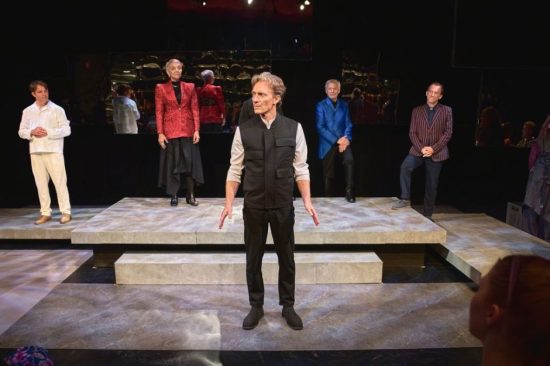
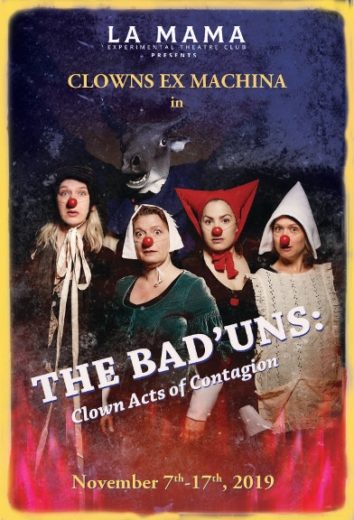
Most recently, her all-women clown troupe, Clowns Ex Machina, debuted the world premiere of The Bad’Uns: Clown Acts of Contagion, created and directed by Kendall, premiered at La MaMa’s Downstairs Theatre.
Can you point to one event that triggered your interest in your career?Yes! I was busy acting and performing and dancing as well, when I went to audit a class with David Shiner, a really amazing clown and physical comedian. It was all new to me and I absolutely fell in love it. I went to my money job that evening and announced that I would be leaving soon because I had to be a clown. They laughed at me – but I proceeded to radically re-organize my life around clowning.
What about this career choice did you find most appealing?
Clowning touches my soul. And I also get to laugh really hard regularly (which is quite a reward for all the hard work). Clowning combines aspects of what I had been doing before (acting and dance and movement), but with an openness, lightness, and sense of presence that was thoroughly unexpected for me. I took one look and thought, “I have to learn how to do this.”
What steps did you take to begin your education or training?
I asked around for where to go and where to study. I went a number of times to see the show where this clown whose class I had attended was performing – and waited at the theatre door to ask him questions. I stopped another woman from my dance class to talk to her — because I knew she was a circus artist. It turned out that her father was an extremely famous clown in Switzerland (Dmitri Clown – who passed away a few years ago). She was a great resource and became a great friend!
I took every opportunity to talk to people and learn what was happening. And I went to Europe to study with one of the masters, Philippe Gaulier — and to travel and see what was happening over there. I asked to apprentice to a great clown who was directing and teaching here in New York. And I basically pushed past all my comfortable places to pursue people who might help me! Then, because there were not many women clowns as role models, I eventually took all I learned and then went in the studio myself with a few other women clowns — and figured it all out again in a way that made sense for me as a woman.
Along the way, were people encouraging or discouraging?
Both! I had to go from being solely a performer to being a creator/performer – and eventually a director and teacher. And producer. So there have been a lot of new hats. And again, because there were not many women in the field, there was a lot of indirect discouragement. Things like “I don’t know what to do with you.” Or “We don’t know where to put you.” But I turned that to my advantage by doing my own thing.
Did you ever doubt your decision and attempt a career change?
I never doubted that it was the right thing for me – though I have had terrible self-doubts about whether I could get anywhere, or whether I can keep growing. But I think that is part of the stages of life and experience – of finding the new challenges and new directions. I have thought about retiring early though – and having a good rest!
When did your career reach a tipping point?
I had two major tipping points, I think. One was when Cirque du Soleil asked me to bring my group of women clowns to an event and make a performance/happening. My contact at Cirque started to cry when we arrived, because he thought the troupe was so beautiful and powerful and funny. That validation was really meaningful to me personally, and gave me the courage to keep going. The second tipping point was when LaMaMa invited me to be one of the LaMaMa family of artists. They have been such an amazing support and encouragement to me – in giving me an artistic home. I am so grateful – and I absolutely wouldn’t be able to do what I am doing without their full-throated support.
Can you describe a challenge you had to overcome?
I ruptured my Achilles tendon and it took a huge amount of time and dedication and persistence (and humility) to come back from it. I was on the sidelines for close to a year. It also kicked up some crippling stage fright – which also took me even a longer time to get over. It still comes back and gives me a tough time occasionally.
What single skill has proven to be most useful?
Listening. To others. But mostly to myself. To my intuition.
What accomplishment are you most proud of?
I’m very proud of the show that I am working on currently. Two of the performers are mothers with newborns – and we have worked hard to make a process that can include them bringing the babies to rehearsal and the theatre. Our set designer also has a new baby, whom he had to leave at home when he traveled to New York City to work with us. So I am very proud that we worked and trusted and encouraged these artist-parents to keep working on the project. It took a lot of courage and patience and helping hands from everyone to do it on our teeny-tiny budget. It was the paradigm shift that was the important part – and I am really thrilled that we made it happen!
Any advice for others entering your profession?
Prepare to “sweat white beads”!
Performance photos by Vanessa Lenz
For more info visit: Clowns Ex Machina